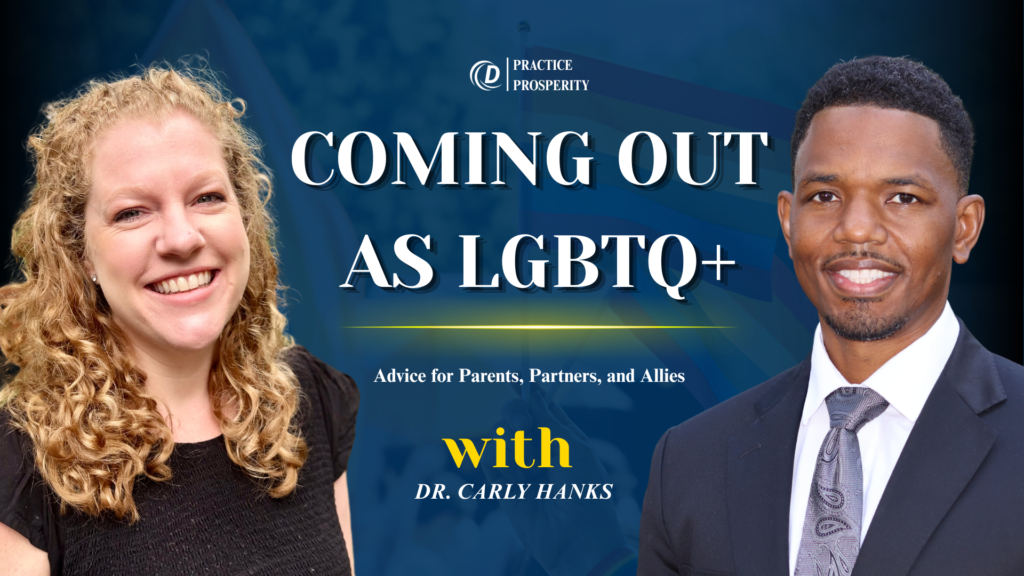
Coming out as LGBTQ+ is not always a single moment or conversation. For many people, it is an ongoing process that involves deciding when to share their identity, whom to trust, and whether they feel safe doing so.
On this episode of Practice Prosperity, Randall Avery speaks with licensed clinical psychologist Dr. Carly Hanks about coming out, supporting LGBTQ+ family members, navigating fertility challenges, and adjusting to pregnancy and parenthood.
Dr. Hanks specializes in working with LGBTQ+ individuals and people navigating reproductive health concerns, including family planning and infertility.
Coming Out Can Happen at Any Stage of Life
One common misconception about coming out is that everyone understands their sexual orientation or gender identity from an early age. While that is true for some people, others do not fully understand or identify their experience until much later.
Dr. Hanks has worked with many LGBTQ+ people in the South who came out later in life. Cultural expectations, religion, traditional gender norms, and concerns about safety can all affect whether someone feels comfortable exploring or openly sharing their identity.
Coming out is also rarely a one-time event. LGBTQ+ individuals may repeatedly have to decide whether to disclose their identity when meeting new friends, coworkers, healthcare providers, or other people throughout their lives.
How to Respond When Someone Comes Out
Being trusted with someone’s identity can also bring up emotions for the person receiving the news. Dr. Hanks explains that confusion, uncertainty, or needing time to process can be understandable.
What matters is how those emotions are handled.
The person coming out should not become responsible for managing someone else’s reaction or educating them about everything related to LGBTQ+ identities. Family members and friends can take responsibility for learning more on their own.
It is also important to use the language the person uses to describe themselves and ask what they are comfortable sharing with others. Questions such as whether the information should remain confidential can help protect the trust they have placed in you.
Creating a Coming Out Plan
There is no single correct way to come out. Instead, Dr. Hanks encourages people to consider their individual circumstances and determine what feels right for them.
A coming out plan can include deciding who should hear the news directly, practicing what to say, considering how someone may react, and thinking about physical and emotional safety.
If there is a possibility that someone could react dangerously, the conversation might happen over the phone, through a video call, or in a public place. Planning for difficult reactions can provide additional control during what may already be an emotional experience.
It is also important to remember that an initially difficult reaction does not necessarily represent how someone will feel forever. Acceptance can sometimes be a process for family members as well.
It is also important to remember that an initially difficult reaction does not necessarily represent how someone will feel forever. Acceptance can sometimes be a process for family members as well, especially when they are adjusting to new information, expectations, or changes in how they understand their relationships.
In a conversation with Dr. Shamika Packer, we also explored how family dynamics and the broader family system can influence the way people respond to change and navigate challenges together.
Supporting an LGBTQ+ Child
Parents can create an accepting environment even before their child ever comes out.
Using inclusive language, challenging disrespectful comments, and demonstrating acceptance of LGBTQ+ people can quietly communicate that home is a safe place.
Parents can also allow children to explore how they express themselves through clothing, hairstyles, and other choices while helping them understand how to navigate difficult social situations.
Dr. Hanks also recommends helping LGBTQ+ children see people like themselves living full lives and finding supportive communities. She specifically mentions PFLAG as a resource for families of LGBTQ+ children, including those who may not have many local support options.
Most importantly, parents should continue seeing their child as a whole person rather than allowing sexual orientation or gender identity to become the defining focus of the relationship.
Why Parents Should Not Out Their Child
Wanting to protect a child can sometimes lead parents to share their child’s identity with relatives or other people without permission.
Even when the intention is positive, Dr. Hanks warns that the impact can be very different.
A child may still be exploring their identity, may not be ready for everyone to know, or may have deliberately chosen not to tell someone they believe will react negatively.
Sharing that information without permission can take away the child’s control, create safety concerns, and damage trust.
Instead, parents can ask their child who they are comfortable telling and whether they would like help planning those conversations.
Fertility Challenges for Working Professionals
The conversation also explores another major life transition: becoming a parent.
Dr. Hanks discusses how people are increasingly waiting longer to start families as they focus on education, careers, relationships, and other priorities.
Fertility struggles can be particularly difficult for high achievers who are accustomed to believing that hard work will eventually produce the desired result. Fertility does not always follow that pattern.
Someone can do everything asked of them and still have very little control over the outcome.
That experience can lead to grief, frustration, regret, or feelings of failure. The financial costs and numerous medical appointments associated with fertility treatment can add even more stress.
Staying Connected During Fertility Treatment
Fertility struggles can affect relationships as well.
Partners may cope very differently. One person may want emotional closeness while another responds by staying busy or focusing on practical tasks. Understanding those differences and communicating openly can help couples navigate the process together.
Dr. Hanks also emphasizes the importance of finding trusted people who can provide support rather than going through fertility treatment in complete isolation.
At the same time, fertility treatment should not be allowed to consume every part of life. Continuing hobbies, taking trips, spending time together, and even taking breaks from treatment when appropriate can help people maintain parts of their lives outside the fertility journey.
Pregnancy, Postpartum, and Supporting Both Parents
Pregnancy is often presented as an overwhelmingly joyful experience, but the physical and emotional realities can be much more complicated.
Postpartum can also bring significant emotional and physical challenges as families adjust to caring for a new child.
For LGBTQ+ couples, it is important that the non-birthing partner is included throughout pregnancy and postpartum. They are becoming a parent too and need opportunities to participate, bond with their child, and receive support during the transition.
Supporting the entire family means recognizing that both parents may experience major changes as they adjust to their new roles.
Building a Practice Through Relationships
Toward the end of the conversation, Dr. Hanks also discusses her transition into private practice.
Her approach to growing the practice emphasizes professional relationships and community connections. She attends networking events, reaches out to other professionals, partners with a psychiatrist, and connects with OB-GYN providers and clinics.
She is also developing consulting services to help companies and medical providers create more welcoming environments for LGBTQ+ people.
Her experience demonstrates how professional relationships, referrals, and consistently introducing your services to the community can play an important role in building a private practice.
Final Thoughts
Whether someone is coming out as LGBTQ+, supporting a child who is exploring their identity, struggling with fertility, or adjusting to parenthood, these experiences rarely have a single correct path.
Dr. Hanks’ central message throughout the conversation is the importance of recognizing each person’s individual circumstances. Support can mean listening without judgment, protecting someone’s privacy, preparing for difficult situations, finding community, and allowing people the space to determine what works for them.
For families, partners, and professionals, creating an environment where people feel safe discussing these experiences can make navigating major life transitions a little less isolating.
Connect with Dr. Carly Hanks to learn more about her practice and the support she provides for individuals, couples, and families navigating major life transitions.
Don't miss our next article
Helping subscribers understand complex financial concepts, investment strategies, retirement planning, and more.


Add Your Heading Text Here

At Deasil Wealth Management, we serve as your personal guide to financial success. From one-on-one guidance to inspiring talks, our mission is to help communities thrive by building wealth.
Quick Links
Get In Touch
© All Rights Reserved.